
A Deep Dive into Ingredients, Allergens, and Frying Practices
🏁 Introduction
Freddy’s Frozen Custard & Steakburgers® has earned a loyal following for its thin, crispy shoestring fries — a signature side that complements everything from steakburgers to custard concretes. But for allergy‑sensitive diners, one question often arises: Does Freddy’s cook their fries in peanut oil?
The short answer is no. Freddy’s fries are cooked in a soybean‑based oil blend, not peanut oil. This choice reflects the brand’s commitment to allergen safety, consistency, and flavor quality.
In this comprehensive article, we’ll explore the science, sourcing, and hospitality strategy behind Freddy’s frying oil — including how it affects nutrition, taste, and allergen management.
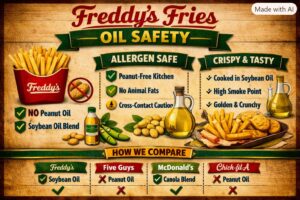
🧩 Freddy’s Frying Oil Policy
Freddy’s uses a refined soybean and high‑oleic soybean oil blend across all U.S. locations. This oil is selected for its high smoke point, neutral flavor, and allergen safety.
Key Facts
- No peanut oil: Freddy’s kitchens are peanut‑free.
- No animal fats: Fries are cooked in vegetable oil only.
- Consistent nationwide: All franchise and corporate stores follow the same oil standard.
- FDA compliance: Highly refined soybean oil is exempt from allergen labeling under U.S. law.
This ensures that Freddy’s fries are safe for guests with peanut allergies and suitable for vegetarian diets.
🍔 Why Peanut Oil Is Avoided
Peanut oil is popular in some restaurants for its flavor and crisping properties, but it poses a serious risk for those with peanut allergies. Even refined peanut oil can trigger reactions in sensitive individuals.
Freddy’s avoids peanut oil for three main reasons:
- Allergen safety: Eliminates risk for peanut‑allergic guests.
- Operational simplicity: Prevents cross‑contact with other menu items.
- Customer trust: Reinforces Freddy’s reputation for transparency and inclusivity.
By choosing soybean oil, Freddy’s ensures that its fries are accessible to a wider audience without compromising quality.
🧠 The Science of Frying Oils
Frying oil affects texture, flavor, and nutritional profile. Freddy’s uses high‑oleic soybean oil, which contains more monounsaturated fats and fewer polyunsaturated fats than regular soybean oil.
Benefits of High‑Oleic Soybean Oil
- Higher smoke point (≈ 450 °F): Ideal for deep frying.
- Improved stability: Resists oxidation and rancidity.
- Neutral flavor: Lets the food shine.
- Healthier fat profile: Lower in saturated fats than animal oils.
This oil blend produces fries that stay crisp longer and absorb less grease — a hallmark of Freddy’s quality.
🧩 Fryer Practices and Cross‑Contact
Freddy’s kitchens use shared fryers for fries, onion rings, and chicken tenders. While the oil itself is peanut‑free, cross‑contact with gluten or dairy may occur.
| Dietary Category | Safe? | Notes |
|---|---|---|
| Peanut Allergy | ✅ Yes | No peanut oil used. |
| Tree‑Nut Allergy | ✅ Yes | No tree‑nut oils used. |
| Gluten‑Free | ⚠️ Limited | Shared fryers may contain gluten traces. |
| Vegan | ⚠️ Limited | Fries are vegan by ingredients but share fryers with non‑vegan items. |
Guests with severe allergies should notify staff before ordering; Freddy’s teams are trained to minimize cross‑contact.
🧩 Nutritional Breakdown
| Serving Size | Calories | Total Fat | Sodium | Protein |
|---|---|---|---|---|
| Regular Fries (113 g) | 440 kcal | 20 g | 590 mg | 5 g |
Freddy’s fries are thin, lightly salted, and cooked to golden perfection. The soybean oil blend contributes to their crisp texture without overwhelming flavor.
🧩 Flavor and Texture Profile
Freddy’s fries are known for their light crunch and clean finish. The oil blend plays a crucial role:
- Neutral taste: Highlights potato flavor.
- Even browning: High‑oleic oil ensures consistent color.
- Reduced greasiness: Lower absorption rate than peanut oil.
This makes Freddy’s fries ideal for pairing with Freddy’s Fry Sauce®, a tangy blend of mayonnaise and ketchup that complements the fries’ crispness.
🧩 Allergen Management Strategy
Freddy’s maintains a detailed allergen chart online and updates it regularly. The chart lists all major allergens — including peanuts, tree nuts, gluten, dairy, and soy — and specifies which menu items contain or may contact them.
Key Points
- Peanut‑free kitchens: No peanut oil or peanut ingredients used.
- Soy presence: Fries contain refined soybean oil, which is safe for most soy‑allergic individuals.
- Staff training: Employees receive allergen‑handling guidance.
- Transparency: Customers can request ingredient lists at any location.
This proactive approach builds trust and ensures safety for allergy‑sensitive guests.
🧩 Comparative Analysis: Freddy’s vs. Competitors
| Restaurant | Frying Oil | Peanut‑Free? | Notes |
|---|---|---|---|
| Freddy’s | Soybean blend | ✅ Yes | Safe for peanut allergies. |
| Five Guys | Peanut oil | ❌ No | Not suitable for peanut‑allergic guests. |
| McDonald’s | Canola blend | ✅ Yes | Contains natural beef flavoring (not vegan). |
| Chick‑fil‑A | Peanut oil | ❌ No | Refined, but still risky for allergies. |
| Shake Shack | Soybean oil | ✅ Yes | Similar to Freddy’s. |
Freddy’s stands out for balancing flavor quality with allergen safety — a rare combination in fast‑casual dining.
🧩 Health and Nutrition Perspective
Soybean oil is rich in omega‑6 fatty acids and contains small amounts of vitamin E, an antioxidant that supports skin and heart health.
Health Highlights
- Zero trans fats: Modern refining removes hydrogenated compounds.
- Lower saturated fat: Compared to animal fats or palm oil.
- Stable frying performance: Reduces oil degradation and smoke.
While fries remain an indulgent food, Freddy’s choice of oil minimizes unhealthy fats and supports cleaner frying.
🧩 Environmental and Ethical Considerations
Freddy’s use of soybean oil aligns with sustainable sourcing practices. Soybean cultivation in the U.S. supports domestic agriculture and reduces reliance on imported palm or peanut oils.
Sustainability Factors
- Local sourcing: Most soybean oil comes from Midwest producers.
- Reduced waste: High‑oleic oil lasts longer, requiring fewer changes.
- Recycling: Used oil is often repurposed for biodiesel production.
This approach reflects Freddy’s broader commitment to responsible operations and community support.
🧩 Customer Testimonials
Freddy’s fans frequently praise the fries for their crispness and clean flavor:
- “They taste fresh, not greasy.”
- “I have a peanut allergy, and Freddy’s is one of the few places I can eat safely.”
- “The fries stay crunchy even with sauce — perfect texture.”
These testimonials highlight how oil choice directly impacts customer satisfaction and loyalty.
🧩 Hospitality Strategy
Freddy’s oil policy reflects a hospitality‑driven approach: prioritize safety, consistency, and inclusivity.
Strategic Benefits
- Broader customer base: Peanut‑free kitchens attract allergy‑sensitive families.
- Operational efficiency: One oil blend simplifies supply chain management.
- Brand trust: Transparency builds long‑term loyalty.
This strategy reinforces Freddy’s identity as a family‑friendly, allergy‑aware diner.
🧩 Culinary Science: Fry Crispness
The crispness of Freddy’s fries is a result of oil chemistry, potato starch, and cooking technique.
- Pre‑blanching: Fries are partially cooked to remove surface moisture.
- High‑heat frying: Soybean oil’s high smoke point ensures rapid crisping without burning.
- Starch gelatinization: Heat transforms potato starch into a golden crust.
- Moisture balance: Thin shoestring cuts reduce water content, enhancing crunch.
This process creates fries that stay crisp longer than thicker cuts, even when dipped in Freddy’s Fry Sauce®.
🧩 Comparative Fry Oils Across Chains
| Chain | Oil Used | Peanut‑Free? | Flavor Impact |
|---|---|---|---|
| Freddy’s | Soybean blend | ✅ Yes | Neutral, crisp, clean finish. |
| Five Guys | Peanut oil | ❌ No | Nutty undertone, risky for allergies. |
| McDonald’s | Canola blend + beef flavor | ✅ Yes | Savory, but not vegan. |
| Chick‑fil‑A | Peanut oil | ❌ No | Distinct flavor, allergen risk. |
| Shake Shack | Soybean oil | ✅ Yes | Similar to Freddy’s, tangier fries. |
Freddy’s stands out for balancing allergen safety with flavor neutrality, making its fries accessible to more diners.
🧩 Nutritional and Health Perspective
Soybean oil contributes to Freddy’s fries being:
- Trans‑fat free.
- Lower in saturated fat than palm or animal oils.
- Rich in vitamin E, supporting antioxidant activity.
While fries remain indulgent, Freddy’s oil choice minimizes unhealthy fats compared to competitors.
🧩 Environmental Impact
Freddy’s reliance on soybean oil supports domestic agriculture and reduces dependence on imported palm oil.
- Local sourcing: Midwest soybean farms supply most oil.
- Sustainability: High‑oleic oil lasts longer, reducing waste.
- Recycling: Used oil is often repurposed for biodiesel.
This aligns Freddy’s with eco‑friendly hospitality practices.
🧩 Customer Testimonials
Fans highlight both flavor and safety:
- “I have a peanut allergy, and Freddy’s fries are the only ones I trust.”
- “They taste fresh, not greasy — perfect with Fry Sauce.”
- “Crispy, light, and safe for my kids with allergies.”
These voices reinforce Freddy’s reputation for inclusive dining.
🧩 Hospitality Strategy
Freddy’s oil choice reflects a customer‑first philosophy:
- Inclusivity: Peanut‑free kitchens welcome allergy‑sensitive families.
- Consistency: One oil blend across all locations ensures reliability.
- Transparency: Clear allergen charts build trust.
This positions Freddy’s as a family‑friendly, allergy‑aware brand in the fast‑casual sector.
🧩 Cultural Significance of Fries
Fries are more than a side dish — they’re a cultural icon. Freddy’s shoestring fries embody:
- American diner tradition.
- Social sharing: Fries are designed for dipping and communal eating.
- Customization: Pairing with Fry Sauce, cheese, or chili.
By ensuring allergen safety, Freddy’s preserves this cultural experience for all diners.
🏁 Conclusion
Freddy’s fries are not cooked in peanut oil. Instead, they’re prepared in a soybean‑based blend that balances crispness, flavor neutrality, and allergen safety.
- Safe for peanut‑allergic guests.
- Vegetarian‑friendly, but cross‑contact possible.
- Environmentally responsible sourcing.
- Consistent nationwide practices.
Freddy’s choice of oil reflects its broader hospitality strategy: inclusive, transparent, and customer‑focused dining.