
The introduction of Freddy’s Steakburger Bowls has generated significant interest among keto dieters, low-carb eaters, gym-goers, and anyone looking for a higher-protein alternative to traditional burger meals. Unlike standard Steakburgers served on a bun, Steakburger Bowls remove the bread entirely and focus on the ingredients that matter most to macro-conscious diners: beef, cheese, vegetables, and toppings.
Freddy’s currently offers several bowl options, including the Steakburger Bowl, Crispy Chicken Bowl, Grilled Chicken Bowl, and Veggie Burger Bowl. According to Freddy’s menu, the Steakburger Bowl contains 660 calories.
For fitness-focused customers, however, calories alone don’t tell the whole story. Understanding protein-to-fat ratios is often the key to determining whether a meal supports goals like muscle building, fat loss, keto dieting, or body recomposition.
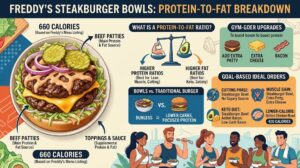
What Is a Protein-to-Fat Ratio?
Simply put, a protein-to-fat ratio compares how much protein a meal provides relative to its fat content.
Different goals require different ratios:
Higher Protein Ratios
Best for:
- Lean muscle gain
- Cutting phases
- Calorie-controlled diets
- High-protein meal plans
Higher Fat Ratios
Best for:
- Keto diets
- Low-carb lifestyles
- Satiety-focused eating
- Sustained energy levels
Freddy’s Steakburger Bowls generally lean toward the higher-fat side because they center around beef patties, cheese, and burger toppings.
Why Steakburger Bowls Appeal to Gym-Goers
Traditional fast-food burgers often contain a large percentage of calories from buns.
By removing the bun, Steakburger Bowls offer:
- Fewer carbohydrates
- More focus on protein
- Better keto compatibility
- Easier macro tracking
This makes them particularly attractive for people monitoring macronutrients rather than simply counting calories.
Anatomy of a Freddy’s Steakburger Bowl
While customizations vary, a typical Steakburger Bowl usually revolves around:
- Steakburger patties
- Cheese
- Lettuce
- Onion
- Pickles
- Burger toppings
- Sauce options
Without the bun, the bowl becomes significantly lower in carbohydrates than a traditional burger meal.
Estimating the Protein Sources
The overwhelming majority of protein comes from:
Beef Patties
Steakburger patties contribute:
- Complete protein
- Essential amino acids
- Iron
- Zinc
- B vitamins
Cheese
Cheese provides:
- Supplemental protein
- Additional fat
- Calcium
Together, these ingredients create a protein-dense meal that satisfies hunger while supporting muscle recovery.
Understanding the Fat Content
Freddy’s Steakburger Bowls are not designed as low-fat meals.
Fat sources typically include:
- Beef
- Cheese
- Mayo-based sauces
- Additional toppings
For keto followers, this is actually beneficial.
Fat contributes:
- Satiety
- Flavor
- Energy
- Hormonal support
The result is a meal that tends to keep diners full for longer periods.
The Steakburger Bowl: Protein-to-Fat Analysis
The Steakburger Bowl contains 660 calories according to Freddy’s menu. [freddys.com]
Although Freddy’s menu listing does not provide a protein-to-fat breakdown on the menu page itself, the composition suggests a profile that is:
- High in protein
- High in fat
- Low in carbohydrates
This combination aligns closely with popular keto and low-carb nutrition strategies.
How It Compares to a Traditional Burger
Consider the major difference:
Standard Steakburger
Includes:
- Bun
- Beef
- Cheese
- Toppings
Steakburger Bowl
Includes:
- Beef
- Cheese
- Toppings
- No bun
Removing the bun eliminates a substantial portion of carbohydrates while keeping most of the protein and fat intact.
For many athletes, that’s a much more favorable macro profile.
Best Bowl for Keto Dieters
Among Freddy’s bowl lineup, the Steakburger Bowl is arguably the most keto-friendly option because it naturally emphasizes:
- Protein
- Fat
- Low-carb ingredients
Its structure closely resembles what many keto followers build when customizing burgers lettuce-wrapped or bunless.
Best Bowl for Muscle Building
Muscle-focused diners often prioritize:
- Protein quantity
- Total calories
- Amino acid quality
The Steakburger Bowl performs well because it delivers complete animal protein from beef while maintaining a substantial calorie level.
For larger athletes, however, additional protein may still be beneficial.
See More: Every Seasonal Concrete Mixer Flavor Ranked by Customer Reviews
Gym-Goer Upgrades
Consider adding:
- Extra patty
- Extra cheese
- Bacon
These additions can substantially increase protein intake without relying on carbohydrate-heavy sides.
Steakburger Bowl vs Grilled Chicken Bowl
Freddy’s menu lists:
- Steakburger Bowl: 660 calories
- Grilled Chicken Bowl: 420 calories
The primary difference is calorie density.
Steakburger Bowl
Advantages:
- Higher fat
- Greater satiety
- Keto-friendly
Grilled Chicken Bowl
Advantages:
- Leaner profile
- Lower calories
- Typically higher protein-to-fat ratio
For strict macro optimization, many bodybuilders gravitate toward chicken-based meals, while keto followers generally prefer the Steakburger Bowl.
Steakburger Bowl vs Crispy Chicken Bowl
Freddy’s menu lists:
- Steakburger Bowl: 660 calories
- Crispy Chicken Bowl: 610 calories
The crispy coating on fried chicken tends to introduce additional carbohydrates and fats compared with grilled options.
For clean macro tracking, many fitness enthusiasts favor either:
- Steakburger Bowl
- Grilled Chicken Bowl
depending on dietary goals.
Should You Add Sauce?
Sauces can dramatically alter macro ratios.
Lower-carb options typically include:
- Mustard
- Mayo-based sauces (depending on serving size)
Higher-carb sauces may contain added sugars.
For strict keto tracking, always review sauce nutrition before ordering.
Foods to Skip If You’re Counting Macros
Many athletes pair the bowl with sides that undermine its nutritional advantages.
Consider avoiding:
- Fries
- Tots
- Cheese Fries
- Onion Rings
- Frozen Custard Desserts
These additions can quickly add calories and carbohydrates.
Instead, focus on maximizing protein within the bowl itself.
Ideal Orders for Different Fitness Goals
Cutting Phase
- Steakburger Bowl
- No sugary sauces
- Water or diet beverage
Muscle Gain
- Steakburger Bowl
- Extra patty
- Extra cheese
Keto Diet
- Steakburger Bowl
- Bacon added
- Low-carb sauce
Lower-Calorie Option
- Grilled Chicken Bowl
Why Steakburger Bowls Have Become So Popular
The popularity of bowl-based fast-food meals reflects changing consumer preferences.
Today’s diners increasingly seek:
- Higher protein
- Lower carbs
- Better macro control
- Customization flexibility
Steakburger Bowls fit all of those trends while still delivering the flavor that makes Freddy’s famous.
Final Thoughts
Freddy’s Steakburger Bowls offer one of the most macro-friendly options on the menu for customers looking to prioritize protein and reduce carbohydrates. The Steakburger Bowl, listed at 660 calories, removes the bun while retaining the beef, cheese, and toppings that provide most of the meal’s protein and fat.
For keto dieters, the bowl delivers a naturally low-carb structure. For gym-goers and athletes, it offers a convenient way to increase protein intake without relying on traditional burger buns. Whether your goal is fat loss, muscle growth, or simply eating fewer carbohydrates, Freddy’s Steakburger Bowl is one of the chain’s most nutrition-focused menu choices.
See More: The Ultimate Freddy’s Keto Survival Guide: Exactly What to Order